


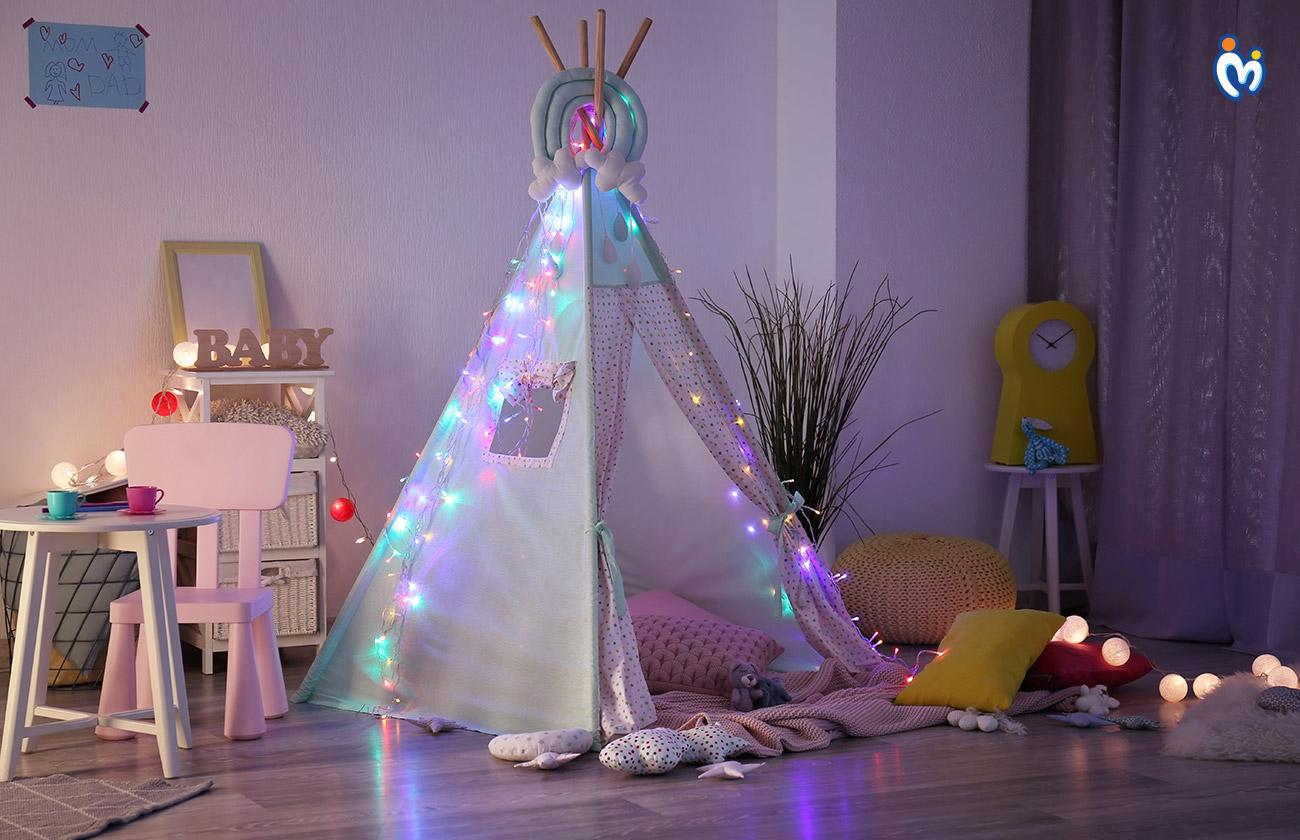
Like we elders need our own privacy /set up for our needs, kids too need their set up as per their age. So once a baby arrives, we need certain set up for the kid. Initially talking about Indian parents we love to keep our babies in the same room till they are 2 years. Once a baby is big enough we set up their room. Colour their wall with cartoon prints, create a cute nursery; keeping in mind how to keep the baby safe and happy. Kids need to have their own playroom, but since large cities have small apartments or homes, we cannot spare an entire room for the kids to play in. However, we can easily set up a play area in the house for the kids so that they can play around, while you are busy with your household chores or other work. Assigning a play area to the kids can help us in staying organized as in this way the toys will not be everywhere in the house. The clutter will be less when the toys will be assigned a home in your home. This play area can be carved out in the living room so that the child stays in front of your eyes all the time, while you can concentrate on other work. 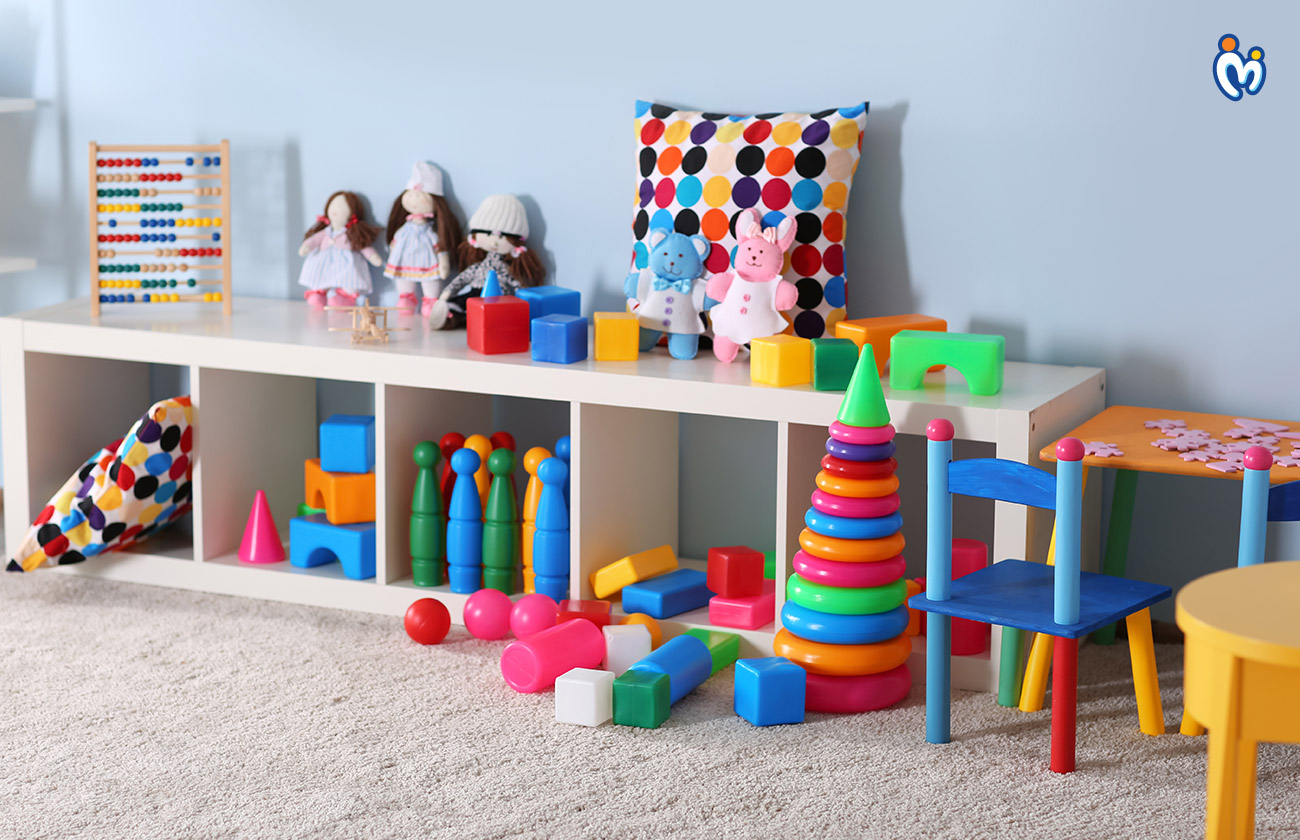 Here is how to set up the play area:
- Make use lots of boxes: large labeled bins are an easy way to de-clutter your space as you can place all the toys, blocks or craft supplies in their respective boxes after the child has finished playing. These bins can be placed in the play area and the child can be taught how to place everything in the right box, once he has done playing. You can also place color coordinated shelves in the play area and assign each color for toys, books, coloring supplies, etc. Modular drawers are also great solutions to keep all the toys intact and out of sight. If you have more than one kid, then the play area can be arranged according to the age of the kids. Younger kid’s stuff can go on the lower shelf while older kid toys can be placed on the upper one.
- Make use of corners and walls: if the floor space is not much in the living room, you can arrange, display and store items on walls. Make use of shelves and make sure that they are strongly anchored. Corner shelves can maximize the play area and you can place books, stuffed animals or small toys on these shelves. You can also hang items on the walls to make more play space and using sturdy hooks as the child might pull them down. You can also hang toy bags or hanging baskets so that they can be stuffed with toys or craft supplies.
- Make use of the furniture: There are many items in the market that can be used for two or more purposes like a desk can be converted into a play table or an ottoman can have storage underneath it, so look for items and place them in the play area. Some desks have storage underneath so you can keep all the scattered crayons, pencils, and erasers hidden in the desk.
- Use divider: Since you need to designate a certain play area, it needs to be divided from the living room area, so you can place modular flooring or a colorful carpet as the divider. The screen will make the room look smaller, while the colored flooring will make it look roomy and open. Rugs are also great and work fine to divide the play area from the living room.
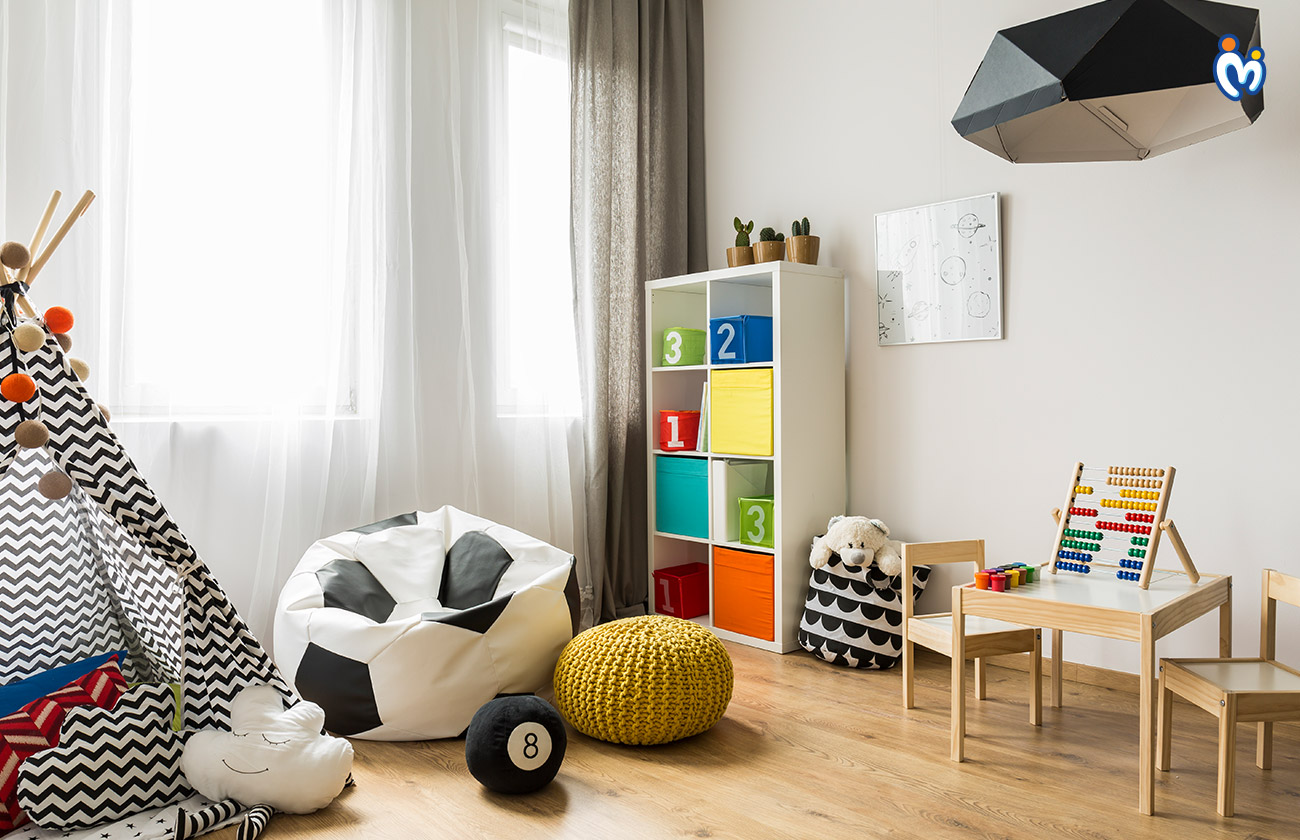 Make sure that everything in the playroom is for playing and no other stuff is placed in the area. I have recently created a play area in my living room corner with foam tiles placed on the floor and lots of colorful shelves on the walls and my son simply loves to play in the area. I have also taught him to straighten up the place, once he is done with his playtime. He is obsessed with his toys and craft supplies and keeps them all sorted out. I simply love the play area in my house as the toys and books have found a home and are no more scattered around. Do you have a set up for your kid’s? Do share your views!
FAQ's
Q. How do I choose the right spot in my home to create a kids’ play area?
Ans. Look for a spot that’s easily visible from where you spend most of your time — like a corner of the living room or a part of the hallway — so you can keep an eye on the child while doing chores. If space is limited, convert a small corner rather than expecting an entire room. The key is convenience and supervision: a play area close to your daily routine helps children stay safe, and gives them a cozy zone for play without requiring a dedicated room.
Q. What storage solutions work best to keep toys organized in a small play area?
Ans. Use large, labeled boxes or bins to store toys, craft supplies, and blocks, and teach the child to return items after play. Use open shelves or modular drawers — with lower shelves for younger children and higher ones if there are multiple kids of different ages. This not only declutters the living space, but also helps children learn to organize and instills the habit of tidying up after themselves.
Q. How can I use wall and vertical space effectively in a play area?
Ans. If floor space is limited, mounting shelves or using corner shelves on walls helps maximize storage. Securely anchor shelves or use sturdy hooks for hanging toy bags or baskets. Hanging crafts supplies or books off the floor creates more play space below, and keeps small items out of reach when not in use — especially useful when toddlers start crawling or exploring.
Q. Is flexible furniture helpful when creating a play area in a small home?
Ans. Yes — furniture that doubles as storage or seating works great. For example, an ottoman with storage underneath, a small desk that doubles as a play table, or kid-height furniture that children can use independently. These multipurpose items save space and adapt as the child grows, making it easier to maintain a functional play zone in a compact living environment.
Q. Should a play area be visually separated from the rest of the living room?
Ans. Yes, ideally. Using a colorful rug, modular flooring, or a small divider can help delineate the play area from the rest of the space without constructing walls. This helps children understand boundaries — that toys and craft items belong in their dedicated zone — and helps maintain order in a shared space such as a living room.
Q. How many toys should be available in the play area at a time for optimal engagement?
Ans. It’s better to display a limited number of toys or activity items at once — for example, 6-8 toys/books — rather than the child having access to all at once. This keeps the space less cluttered, reduces overstimulation, and allows the child to focus better on individual toys. Rotate toys periodically to maintain interest and encourage creativity.
Q. How can a well-designed play area support independent play and learning for toddlers?
Ans. A play area with easy-to-reach shelves, organized toy bins, and kid-height furniture encourages toddlers to choose activities themselves, explore, and play independently. Such environments foster self-reliance, creativity, and problem-solving skills. It also reduces dependence on constant parental supervision, giving children space to learn while also giving parents a little respite.
Q. What safety considerations should I keep in mind while setting up a play corner in a shared room?
Ans. Ensure that shelves or hanging storage are firmly anchored, avoid heavy or unstable furniture that a child could pull down, and keep small or choking-hazard items out of reach. Use soft mats or rugs to cushion the floor, and ensure the play zone is away from fragile decor, sharp edges, or breakables. Always keep in mind visibility so you can supervise, even if you’re busy with chores.
Q. How can toy storage organization teach kids responsibility and tidiness?
Ans. By using labeled bins and shelves and instructing children to return toys after playing, you’re teaching basic organizational skills. This builds a sense of ownership and respect for their belongings. Over time, it becomes a habit — reducing clutter in the home, making clean-ups easier, and helping children learn that playtime includes tidying up, which fosters discipline and respect for space.
Q. Is it possible to create an engaging play area even in small apartments, and how?
Ans. Absolutely. Even if space is limited, you can carve out a small corner in the living room or a hallway — use vertical storage, wall shelves, hanging baskets, and compact multipurpose furniture. Use soft flooring or rugs, limit toys displayed at a time, and visually demarcate the play zone with colorful mats or carpets. With smart planning and creativity, small homes can still provide children a safe, organized, and fun play space.