


I still can't believe how time has passed - from a new born my daughter has grown up to a toddler. You won’t believe your eyes and halfway through the infant’s first year is already gone. Every baby is different. All the babies achieve milestones differently. My daughter started to sit on her own by the time she was six months old but I have heard it may differ from other mothers. My daughter’s progress truly amazed me.
What you can expect at six months?
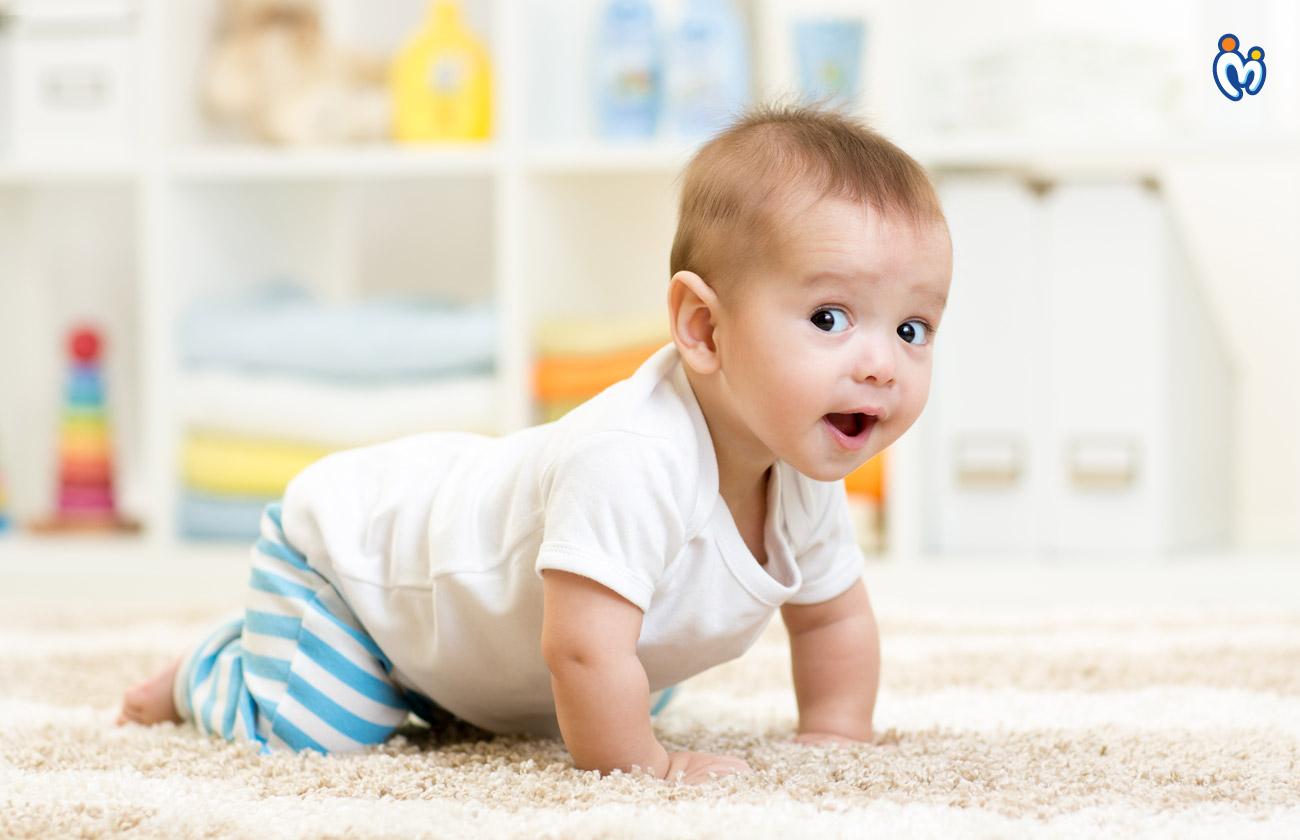
At six months, babies start to eat solid food and communicate with you. They should have doubled the birth weight by now. Your baby can now sit alone without any support. Baby can roll from his back to stomach and vice versa. He can rise up on hands and knees and rock back and forth.
Sleep
The most important milestone that matters most for almost all the moms is sleep cycle. Most babies sleep for six to eight hours at a stretch by six months, which is a very big milestone but I must tell you that you still need to wake the child up for feeds every 3 hourly even at night.
Motor skills
So now that the baby can roll over, we have to be very careful while they are asleep. It’s a good habit to surround them with body pillows so they don’t fall off the edge. This is the reason why we need to be extra precautious during this phase.
Eyes
You may notice that your baby’s eyes have changed from their birth colour. Lighter color eyes will now come to its final shade. If they have lighter eyes now they will remain like that forever but this hasn’t been proved yet.
Food
Now you can slowly start introducing solids to your baby. Your pediatrician will tell you to start introducing solid food to your infant. You can begin with cereal mixed with breast or formula milk.
You should also include fruits in your baby’s meal every day. Also make sure you wait for a day or two after including new food so that you come to know whether your baby is allergic or not. If your baby doesn’t like any food, don't force him; instead wait for a few days and make an attempt again.
According to doctors it takes 8 to 25 attempts for a baby to like a new food and develop a taste for it. Cow’s milk should not be given until your baby is at least 1 year old. Although products like cheese, butter and ghee are fine.
Communication
Your baby will start saying words like baba, mama, papa etc. To help your baby with learning new words, try reading stories at night. Babies at 6 months start to recognize people and things around them. You may also see signs of fear when she is with a stranger or unknown person.
Breastfeeding
Although the minimum recommendation for breastfeeding is atleast 1 year you can continue till the time you can and then later wean off. The more you breastfeed the better it is as it gives your baby the immunity and strength which no other thing in the world can. And in no time your baby will be a strong baby! Do not miss out on these growing up years ever! Stay tuned for more.
FAQ's
Q. What developmental milestones can I expect from my baby at six months?
Ans.By six months, most babies start showing greater independence and awareness. They usually begin to sit without support, roll from back to tummy, and rock on their hands and knees. Their communication improves, with babbling sounds like mama or baba. Many babies also start eating solids at this stage. However, every baby develops at their own pace, so small variations are completely normal.
Q. How much should a six-month-old baby sleep?
Ans.Most six-month-old babies sleep for six to eight hours at a stretch at night, which feels like a big milestone for parents. However, you may still need to wake your baby every three hours for feeding, depending on your pediatrician’s advice. Their daytime naps usually range from two to three naps of varying lengths. Sleep patterns differ for each child, so consistency in bedtime routines helps.
Q. Is it normal for babies to sit unsupported at six months?
Ans.Yes, many babies begin sitting without support around six months. Some may achieve this milestone a little earlier or later, and both timelines are perfectly normal. If your baby isn’t yet sitting independently, you can encourage them by giving tummy time and helping them practice sitting with soft support. As long as they are making steady progress in motor skills, there is no cause for concern.
Q. When can I introduce solid foods to my baby?
Ans.Doctors generally recommend starting solids at around six months. Begin with smooth, easy-to-digest foods like infant cereal mixed with breast milk or formula. Gradually introduce pureed fruits and vegetables. The key is to offer one new food at a time and observe for allergies for at least 2 days before introducing another. Babies need repeated exposure—8 to 25 attempts—to accept a new taste, so patience is essential.
Q. How do I know if my baby is allergic to a new food?
Ans.After introducing a new food, watch your baby for signs of an allergic reaction such as rash, vomiting, diarrhea, swelling, or unusual fussiness. Keep a 2-day gap between new foods so it’s easier to identify the trigger if symptoms occur. If you notice anything concerning, stop the food immediately and consult your pediatrician. Early detection helps prevent discomfort and ensures safe feeding habits.
Q. Can a six-month-old baby drink cow’s milk?
Ans.Whole cow’s milk is not recommended for babies below one year of age because their digestive systems aren’t mature enough to handle it. It also lacks essential nutrients needed for healthy growth. However, dairy products like butter, cheese, and ghee are generally safe in small amounts as part of solid foods. Breast milk or formula should remain the primary source of nutrition at six months.
Q. How can I help improve my baby’s communication skills?
Ans.At six months, your baby begins to babble and imitate sounds. You can support their communication development by talking to them frequently, reading simple stories, singing songs, and responding to their sounds. Babies also start recognizing familiar faces and may show fear around strangers. Regular interaction builds vocabulary, emotional bonding, and early speech skills, making this a crucial stage for language development.
Q. How can I ensure my baby sleeps safely now that they can roll over?
Ans.Since your baby can now roll over, sleeping safety becomes important. Avoid placing pillows, toys, or loose blankets in the crib. You can surround the edges of the bed with body pillows only when you are watching, but never leave them unattended with extra bedding. Place your baby on their back to sleep, but allow them to roll naturally. A firm mattress and supervised daytime tummy time also help.
Q. Is it normal for my baby’s eye colour to change at six months?
Ans.Yes, it’s common for a baby’s eye colour to change during the first year. Many babies are born with grey or blue eyes that gradually shift to a final shade by 6–12 months. If your baby currently has lighter eyes, they may stay that way, but this is not guaranteed. Eye colour depends on genetics and pigmentation, and the final shade becomes stable as melanin develops.
Q. How long should I continue breastfeeding my six-month-old?
Ans.While the minimum recommended duration for breastfeeding is one year, many mothers continue beyond that for added immunity and nutrition benefits. At six months, even though solids begin, breast milk or formula remains the main source of nourishment. Continue breastfeeding as long as you and your baby are comfortable. These early months pass quickly, so enjoying this bonding time is just as important as meeting nutritional needs.