


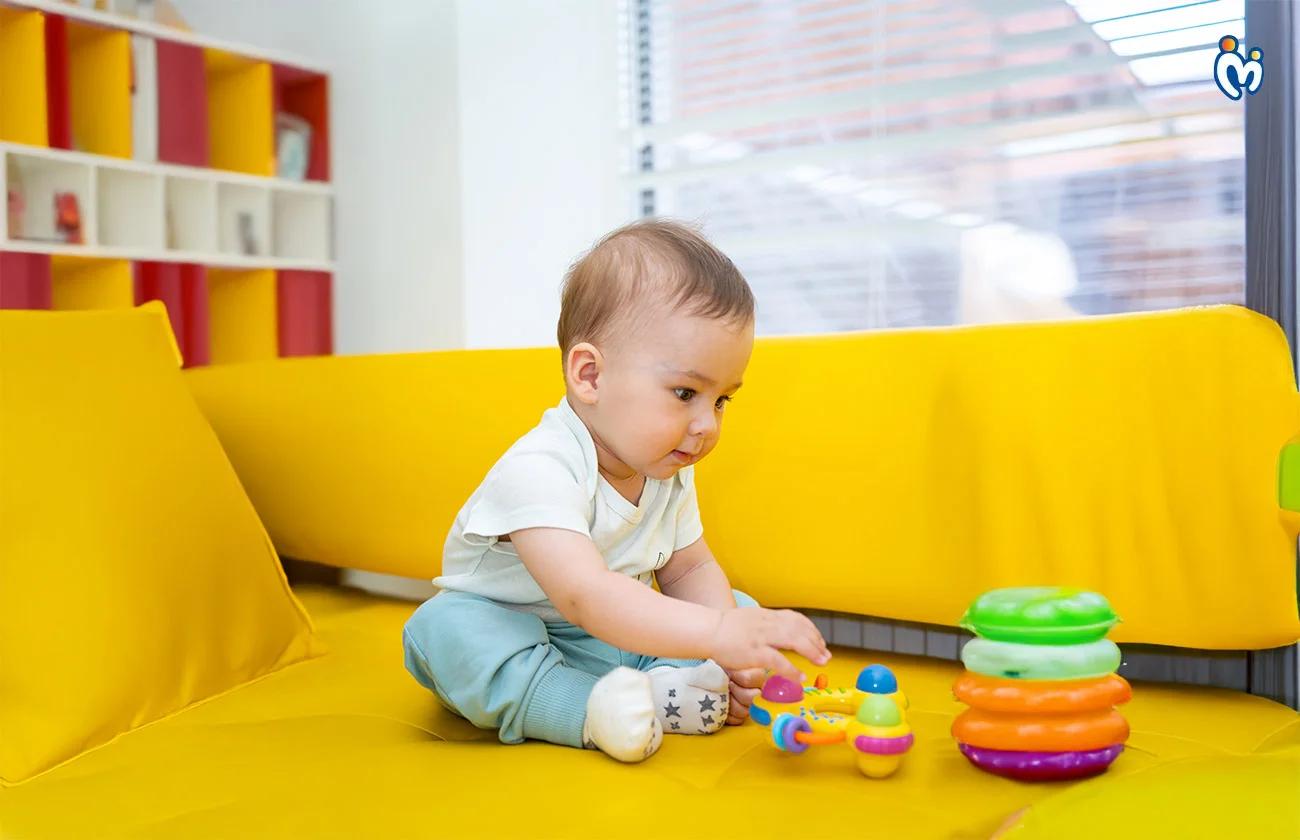
Ria stared at the overflowing toy shelf soft plushies, rattles, musical toys, stacking cups, teethers, crinkle books, and a dozen more brightly colored things that were supposed to keep Aarav busy.
But instead, her 8-month-old would hop from one toy to another, barely spending a few seconds with each.
One day, out of exhaustion, she picked just three toys and kept the rest away:
- a soft cloth book
- a wooden rattle
- stacking rings
And something magical happened.
Aarav played with the same rattle for an entire 15 minutes—turning it, shaking it, biting it, dropping it, picking it up again. His focus sharpened, his curiosity deepened, and his joy returned.
Ria didn’t buy anything new. She didn’t follow a fancy method. She simply discovered the magic of toy rotation.
And mamy, this single change can transform your baby’s playtime, learning, and environment.
What Is Toy Rotation?
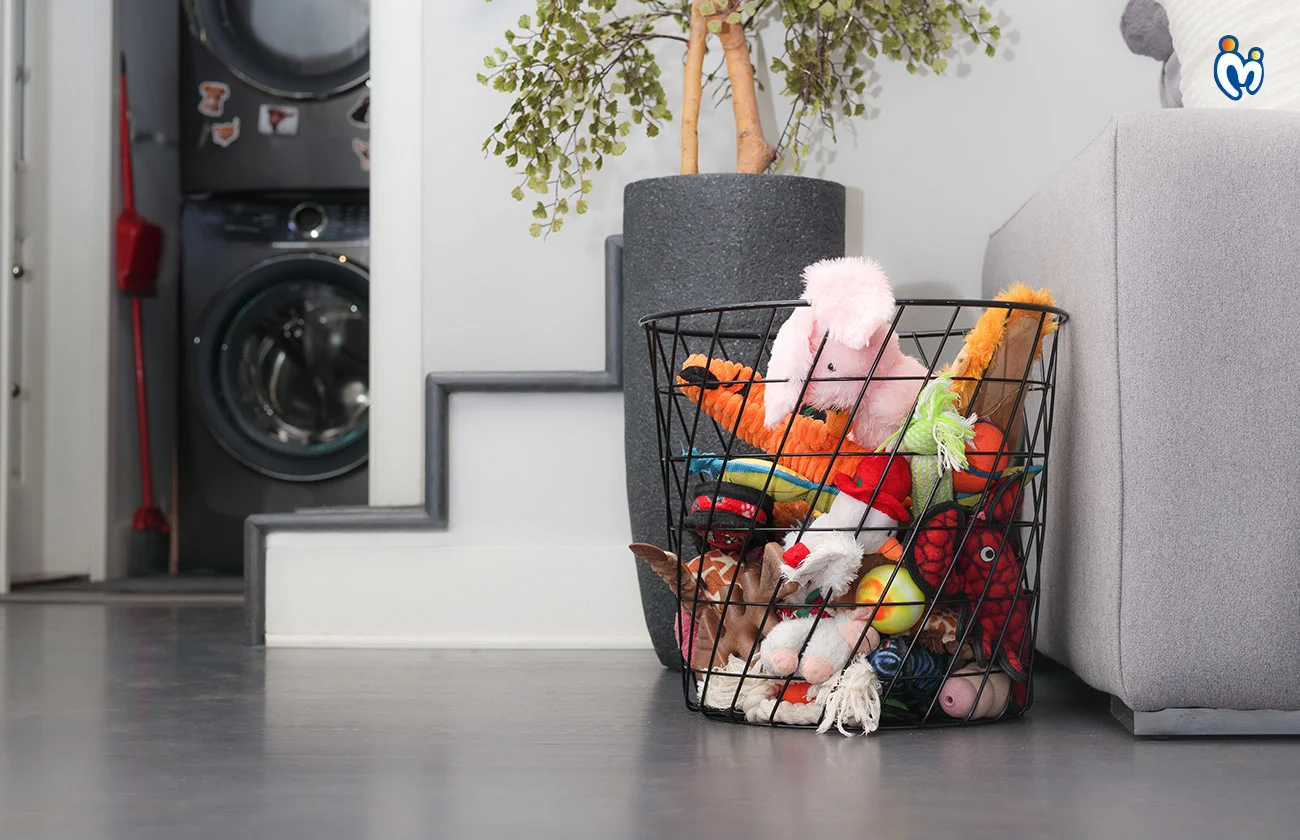
Toy rotation is a simple playtime strategy where you keep only a small set of toys accessible to your baby while storing the rest. Every week or two, you rotate these toys—bringing out new ones and putting away the older ones.
This makes the old toys feel new again, keeps your baby curious, avoids overstimulation, and naturally encourages better focus.
Think of it as creating a personalized toy library at home—simple, clutter-free, and incredibly effective for infant development.
Why Toy Rotation Works: The Science Behind “Less Is More”
Babies don’t need 25 toys—they need a few that allow deep exploration.
Here’s why toy rotation boosts early childhood development:
1. Encourages Deep Focus
Babies learn through repetition.
When there are too many toys, they switch quickly from one to another.
With fewer toys:
- attention span increases
- exploration becomes deeper
- cognitive pathways strengthen
They build the crucial skill of sustained attention, which supports learning later in school.
2. Boosts Creativity and Imaginative Play
When choices are limited, babies explore toys in multiple ways:
- A rattle becomes a drumstick
- A soft toy becomes a friend
- A ball becomes a rolling challenge
- A cup becomes a tower
Simple toys + repeated exposure = creative thinking.
3. Reduces Overstimulation
Bright, noisy toys everywhere can overload your baby’s senses.
Toy rotation creates a calmer environment where your baby can:
- focus without distraction
- regulate emotions
- enjoy play without chaos
Sensory balance = a happier, calmer baby.
4. Helps Babies Appreciate Toys More
When a toy comes back after a break, your baby treats it like it's brand new.
This teaches:
- appreciation
- curiosity
- excitement in small things
Even tiny humans feel joy when something “returns.”
5. Saves Money, Space & Mental Energy for Mamies
A clean, clutter-free play area changes everything.
- Less mess
- Less stress
- Less spending
- More meaningful play
Toy rotation is not just for babies. It’s a relief strategy for mothers too.
How to Start Toy Rotation at Home
Starting toy rotation doesn’t require Pinterest labels or expensive shelving.
Here’s a simple plan:
Step 1: Sort All Toys Into Categories
Group your baby’s toys:
- Sensory toys – rattles, teethers, crinkle books
- Fine motor toys – stacking cups, rings
- Soft toys – plush animals
- Pretend toys – simple role-play toys
- Books – cloth books, board books
- Musical toys – shakers, drums
Sorting helps you build balanced rotation baskets.
Step 2: Keep Only 4–5 Toys Out
Yes, just 4–5. That’s the magic number.
Place them somewhere easily accessible—a low shelf, a small basket, or a floor tray.
Step 3: Rotate Every 1–2 Weeks
Swap toys with the stored ones.
This creates a cycle of newness without buying more.
Step 4: Follow Your Baby’s Signals
If your baby is obsessed with one toy:
- keep it in every rotation
- let their preference guide the play
This is called child-led play, and it supports emotional and cognitive development.
Step 5: Keep the System Simple
No need for complicated organization.
The goal:
More play, less clutter, less mama stress.
How Cradle Rotating Hanging Toys Fit Into Toy Rotation
Your second target keyword is:
- cradle rotating hanging toys
So here is a natural and SEO-friendly integration.
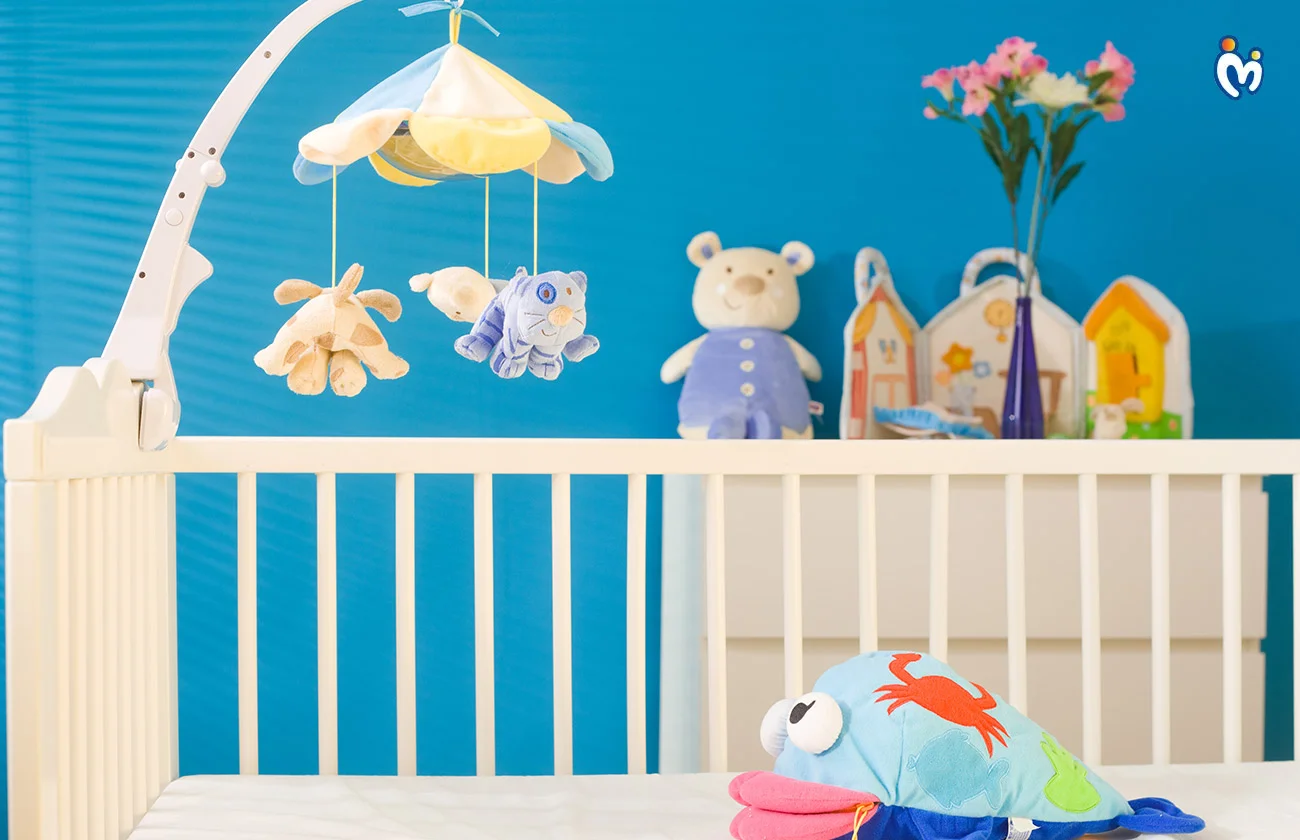
Cradle rotating hanging toys—also called crib mobiles, rotating baby toys, or hanging cradle toys - are an excellent part of a toy rotation system.
They support:
1. Visual Tracking
As the toys rotate, babies learn to follow movement with their eyes—an important developmental milestone.
2. Sensory Stimulation
With gentle colors, sounds, or music, rotating hanging toys calm babies and stimulate early learning.
3. Habit-Building Routine
Using cradle rotating hanging toys during:
- naptime
- bedtime
- quiet play
…creates a predictable routine that comforts infants.
4. Natural Rotation Opportunity
You can rotate between:
- colorful animal mobiles
- soft plush mobiles
- musical mobiles
- high-contrast newborn mobiles
Just like toy rotation on the floor, rotating hanging toys in the cradle helps:
- refresh your baby’s interest
- reduce overstimulation
- make bedtime soothing
Toy Rotation Ideas by Age Group
Age-appropriate toy rotation keeps learning aligned with developmental stages.
0–6 Months (Newborn Rotation)
Best toys to rotate:
- high-contrast cards
- soft rattles
- tactile teethers
- soft cloth books
- cradle rotating hanging toys
- crinkle sensory toys
Newborns enjoy sensory experiences, so simple movement toys like rotating cradle mobiles work beautifully.
6–12 Months (Exploration Phase)
Rotate:
- stacking cups
- textured balls
- push-pull toys
- musical shakers
- bath toys
- simple cause-and-effect toys
This is the “curiosity explosion” stage—perfect for meaningful rotations.
12+ Months (Early Toddler Stage)
Include:
- basic puzzles
- shape sorters
- building blocks
- role-play items
- early pretend-play toys
- soft dolls or animal figures
Your baby becomes more intentional and imaginative here, and toy rotation prevents boredom.
Extra Tips for Mamies: How to Make Toy Rotation Effortless
✔ Create 3–5 small rotation boxes
Label them by age or theme.
✔ Include at least 1 book in every rotation
Reading is the foundation of early learning.
✔ Use a clean, calm space
A visually simple play area encourages deeper play.
✔ Don’t stress
Toy rotation is a flexible, mama-friendly system—adapt it your way.
A Gentle Reminder, Mamy️
You don’t need a room full of toys to raise a smart, curious, emotionally secure baby.
Toy rotation teaches them:
- patience
- creativity
- exploration
- joy in simple things
And sometimes, the best toy is still you—your voice, your smile, your loving presence.
Try packing away a few toys tonight.
Tomorrow morning will feel calmer, more organized, and more joyful for both of you.
Quick FAQ for Curious Mamies
Q. How often should I rotate toys at home?
Ans.Most mamies find that rotating toys every 1–2 weeks works beautifully. This time frame keeps your baby curious without overwhelming them with too many new items at once.
However, toy rotation is meant to be a flexible, baby-led system. If your little one is showing a strong preference for a particular toy exploring it in new ways, chewing it, banging it, or carrying it everywhere keep it in the basket longer.
Babies learn best through repetition, so following their interest is more important than sticking to a strict schedule.
You can also rotate toys sooner if your baby seems disinterested or overstimulated by the current setup.
Q. Do babies get bored if they have fewer toys?
Ans.Surprisingly, no-babies actually engage more deeply when they have fewer toys. Too many choices can overwhelm them and make their attention jump quickly from one toy to another.
When only a few toys are available, babies:
- explore each toy more thoroughly
- repeat actions that help brain development
- practice fine motor skills
- create imaginative play scenarios
- stay engaged for longer periods
So fewer toys do not equal boredom in fact, limited options actually boost creativity, curiosity, and problem-solving during playtime.
Q. Are cradle rotating hanging toys good for newborns?
Ans.Yes, cradle rotating hanging toys are wonderful for newborns when used safely. These rotating mobiles support multiple early developmental skills, including:
- Visual tracking: Babies learn to follow the rotating toys with their eyes.
- Early focus: Slow, predictable movement trains their eyes to lock onto objects.
- Sensory development: Soft colors, gentle music, and delicate motion stimulate their senses without overwhelming them.
- Emotional soothing: The calming rotation creates a peaceful environment that helps babies relax.
Just make sure the mobile is hung safely out of your baby’s reach, and avoid overstimulating lights or loud sounds for very young infants.
Q. Can rotating cradle toys help babies sleep better?
Ans.Yes, many parents use rotating cradle hanging toys as part of their nightly bedtime routine. The gentle spinning motion combined with soft lullabies sends a strong signal to your baby’s brain that it’s time to unwind.
Benefits include:
- calmer transitions to sleep
- reduced crying during bedtime
- predictable sleep associations
- improved self-soothing
Rotating cradle toys should be turned off once your baby falls asleep to ensure a safe and distraction-free sleep environment.
Q. Do I need to buy special toys for toy rotation?
Ans.Not at all. Toy rotation isn’t about buying more toys it's about using what you already have more effectively.
You can rotate:
- kitchen utensils (wooden spoon, whisk)
- simple household items (plastic cups, boxes, lids)
- scarves or fabric scraps
- cardboard tubes
- old wallets or keys (safe versions)
Babies love exploring everyday textures and shapes.
Even a simple household object can become a creative learning tool in a toy rotation system.
Q. What is the ideal number of toys for a baby?
Ans.For each rotation basket, 4–6 toys are usually perfect.
This number allows enough variety to keep your baby engaged but not so much that they feel overwhelmed or distracted.
Try including:
- 1 sensory toy
- 1 fine motor toy
- 1 soft toy
- 1 book
- 1 musical toy
- 1 open-ended toy (cups, blocks, rings)
This gives a balanced mix of learning experiences in each rotation.
Q. Can toy rotation help reduce screen time?
Ans.Absolutely. Toy rotation naturally reduces screen dependency because babies become more engaged with the toys they already have.
A calm, uncluttered space encourages:
- longer independent play
- more curiosity
- active exploration
- less boredom
When babies are genuinely interested in their environment, the temptation to rely on screens drops significantly.
Q. Should I rotate cradle hanging toys too?
Ans.Yes! Rotating your baby's cradle rotating hanging toys works beautifully alongside toy rotation on the floor.
Switching between:
- animal-themed mobiles
- soft plush mobiles
- musical mobiles
- black-and-white mobiles
…keeps your baby visually stimulated and curious without overwhelming them.
It also helps reinforce routines for example, using a calming mobile for bedtime and a more stimulating one for daytime play.
Q. How do I store toys for rotation?
Ans.Storage doesn’t have to be fancy. Toys can be organized in:
- small plastic bins
- cloth organizers
- labeled boxes
- zip bags
- baskets
- under-bed storage
Label them by age, theme, or category—whatever feels easiest for you.
The goal is to make rotation quick and stress-free, not complicated.
Q. Is toy rotation helpful for toddlers too?
Ans.Yes, toy rotation becomes even more valuable as babies grow into toddlers.
Toddlers are constantly learning new skills and can quickly become bored or overstimulated.
Toy rotation supports toddler development by improving:
- independence (they can choose from a small set easily)
- decision-making skills
- problem-solving abilities
- language development (fewer toys = more pretend play)
- longer concentration time
Rotations also help reduce toy messes, tantrums, and overstimulation something every toddler parent appreciates!