


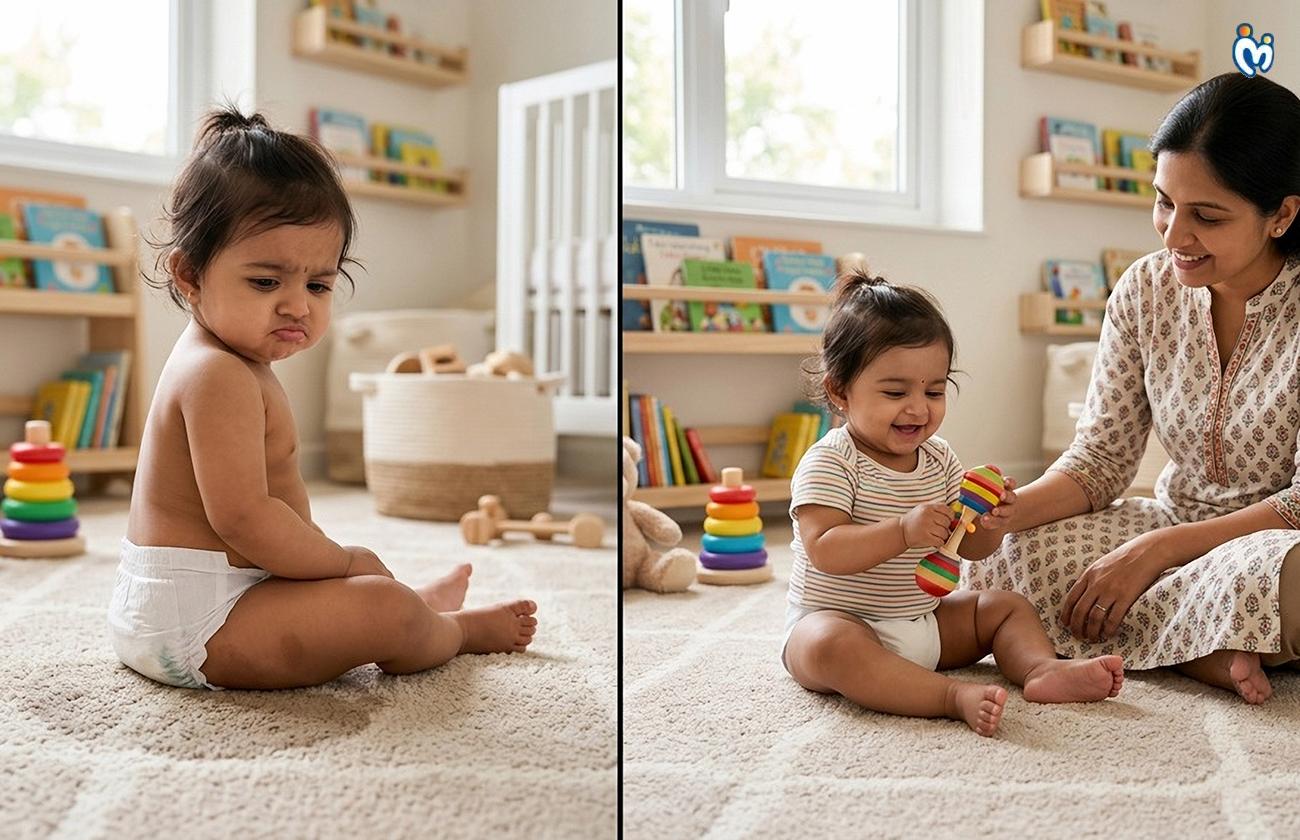
It changes quickly. One day your baby is still. The next day, they are rolling, crawling, trying to stand. And somewhere in between, leaks begin to show up. A damp onesie. Sheets that need changing again. You start planning the day around extra outfits.
This is the stage where diaper leak prevention becomes part of the routine. If you’re seeing diaper leaks active babies often have, you’re not doing anything wrong. Movement changes everything. Fit shifts. Gaps appear. Diapers fill faster.
The reassuring part is this. Most leaks have simple reasons. And once you see them clearly, how to prevent diaper leaks becomes easier to manage.
Why do diaper leaks happen more often in active babies
Movement brings a new kind of pressure on the diaper. It is no longer just about absorption. It is also about how the diaper holds its shape through constant motion. Here are the most common diaper leakage causes:
Movement and friction
- Crawling and rolling shift the diaper slightly
- Even a small gap near the legs can lead to leaks
- Sitting for long periods can push moisture outward
This is why diaper leaks while crawling or even diaper leaks while walking feel sudden.
Improper diaper fit
- The correct diaper size for babies changes faster than expected
- A tight fit can leave marks
- A loose fit creates gaps that are easy to miss
Faster saturation
- Active babies wet more frequently during play
- A diaper that is already used has less capacity left
- This is where diaper change frequency active babies need becomes higher
Many parents notice this shift right when mobility begins. It’s a common phase.
Common signs your baby’s diaper is leaking
Leaks are not always obvious right away. Sometimes the signs are quiet. You may notice:
- Dampness around the waist or thighs
- Red marks on the skin
- Fussiness during playtime
- Frequent outfit changes
- Wet bedding in the morning
These usually point to fit, size, or absorbency. Recognising them early helps you find the right baby diaper leakage solutions.
Tips to prevent diaper leaks for active babies
Most leaks can be managed with small, consistent changes.
Choose the right diaper size
Getting the correct diaper size for babies is where it begins.
- Keep a close eye on:
- Waistband marks that stay for too long
- Gaps around the legs
- Sudden increase in leaks during growth phases
Many parents quietly share this online too. During growth spurts, moving one size up often helps with coverage. This is one of the simplest steps in diaper leak prevention.
Check the diaper fit carefully
Even the right size can fail if the fit is off. A few simple diaper fitting tips for babies:
- The waistband should sit just below the belly
- You should be able to slide two fingers inside comfortably
- Leg cuffs must be pulled out fully
Missed cuffs are a common reason for diaper leaks while crawling.
Change diapers more often
Active days need a slightly different rhythm. A helpful routine:
- Check every 2 to 3 hours
- Change immediately after bowel movements
- Always check after naps or long travel
Higher diaper change frequency active babies need keeps the diaper from getting too full.
Switch to pant style diapers for better fit
As movement increases, diaper design starts to matter more. Pant style diapers for active babies are built to stay in place during motion. They offer:
- A stretchable waistband that adapts as your baby moves
- A secure fit around the legs
- Quick pull-up changes, even when your baby won’t stay still
Many parents shift at this stage because it feels easier. MamyPoko pant style diapers are designed keeping this phase in mind. The fit adjusts with movement, which helps reduce gaps during play.
Ensure proper diaper positioning
Sometimes the smallest detail makes the difference.
- Before finishing each change:
- Check that leg cuffs are not folded in
- Smooth out any creases
- Ensure the waistband sits evenly
Good positioning helps prevent gaps and keeps leaks under control.
Change diapers frequently for active babies
More activity means quicker saturation.
- A full diaper is more likely to leak
- Regular checks prevent overflow
- Shorter intervals help maintain dryness
This simple habit supports long-term diaper leak prevention.
Daytime vs night-time leak prevention tips
Your baby moves differently during the day and night. Adjusting your routine helps.
During the day
- Movement increases the chance of leaks
- Check diapers every few hours
- Re-adjust fit after naps
Being prepared makes diaper leaks while walking or crawling easier to manage.
At night
Night leaks usually come from a full diaper. If you’re wondering how to stop diaper leaks at night, try:
- A fresh diaper right before sleep
- Checking the fit carefully
- Using higher absorbency options
MamyPoko overnight diapers are made for longer hours, helping manage moisture through the night.
Choosing the right MamyPoko diaper for leak protection
As babies grow, what you choose starts to matter more. Parents often look for the best diapers for active babies that can keep up with movement without constant adjustments. MamyPoko diapers for active babies focus on a few essentials:
- Stretchable fit that moves with the baby
- Strong absorbency that holds through play
- Secure fit that reduces gaps
Features like even absorption layers help spread moisture across the diaper, so it does not collect in one spot. This is where MamyPoko leak protection diapers and MamyPoko stretchable fit diapers quietly support everyday routines.
When to consider changing diaper types
Sometimes leaks are just a signal. A small nudge that something needs to change. Watch for:
- Repeated leaks despite correct usage
- Red marks around the waist or thighs
- Leaks starting after a growth phase
- More movement during changes
This is often when parents move to pant style diapers for active babies. Trust what you’re seeing. You’ll usually notice the shift early.
FAQs
Q. Why do diaper leaks happen when babies start crawling?
Ans. Movement shifts the diaper, especially around the legs. Even small gaps can lead to leaks. This is why diaper leaks while crawling are common.
Q. How often should I change my baby’s diaper?
Ans. Every 2 to 3 hours works well for most active babies. Many parents share that increasing frequency reduces leaks during play.
Q. How can I stop diaper leaks at night?
Ans. Use a fresh diaper before bedtime, check the fit, and consider higher absorbency options like MamyPoko overnight diapers.
Q. Are pant style diapers better for active babies?
Ans. For many parents, yes. Pant style diapers for active babies stay in place better during movement and are quicker to change.
Q. What is the most common cause of diaper leaks?
Ans. Incorrect size or poor fit. Getting the correct diaper size for babies usually solves most issues.
Final thoughts
This stage passes. But while you’re in it, small things can feel big. Leaks are common with movement. They are also manageable. Focus on what you can control:
- The right size
- A secure fit
- Timely changes
MamyPoko pant style diapers are designed to support this phase with a fit that moves with your baby and absorbency that keeps up with the day. When the basics fall into place, everything feels a little easier. And your baby feels it too.