



Introduction
There is always a quiet pause before a pregnancy test.
You may have been counting days. Noticing small shifts in your body. Wondering if it is too early to know. And then comes the practical question. Which pregnancy test should you take?
A pregnancy test at home feels simple. Immediate. Private. A blood test for pregnancy feels more certain.
Both are valid. What helps is knowing when each one makes sense. This guide stays with that thought. Clear. Steady. Easy to follow.
What Is a Pregnancy Test and How Does It Work?
At its core, every pregnancy test looks for one thing. A hormone called hCG.
Your body begins to produce hCG after implantation. It appears in the blood first. Then in urine.
That is why timing matters.
- Test too early, and levels may not show yet
- Wait a little, and results become easier to read
This is often where the question begins. How to confirm pregnancy in a way that feels reliable.
Types of Pregnancy Tests
1. Pregnancy Test at Home (Urine Test)
For most people, this is the first step.
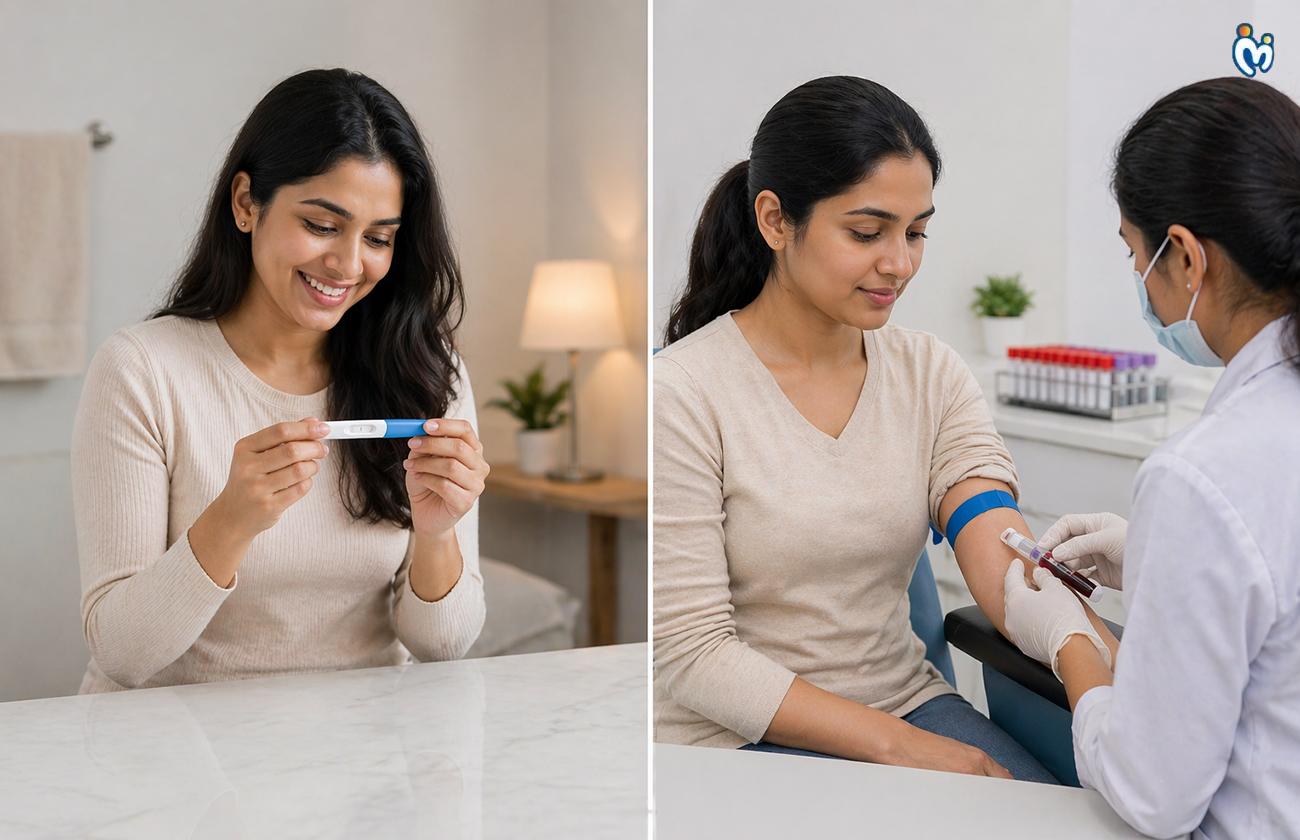
A pregnancy test at home checks hCG in urine using a strip or stick.
How to use it
- Place the stick in the urine stream or dip it
- Wait for a few minutes
- Lines or symbols appear
When to take it
- After a pregnancy test after missed period
- Earlier testing can affect home pregnancy test accuracy
What people appreciate
- Easy to use
- Easily available
- Quick results
Where to be careful
- Timing matters more than anything
- Instructions need to be followed closely
2. Blood Test for Pregnancy
A blood test for pregnancy is done at a clinic.
It detects hCG earlier and in smaller amounts. This makes it more sensitive.
Types of tests
- Qualitative: confirms if hCG is present
- Quantitative: measures exact levels
You may hear it referred to as an hcg blood test pregnancy in medical settings.
When it is useful
- For an early pregnancy test
- When results are unclear
- When doctors need to track progress
Blood Test vs Urine Pregnancy Test
If you are comparing blood test vs urine pregnancy test, the difference comes down to timing and precision.
Accuracy
- Home test: High when used correctly
- Blood test: Very high
Detection time
- Home test: After missed period
- Blood test: Before missed period
Convenience
- Home test: Immediate
- Blood test: Requires a visit
Result time
- Home test: Minutes
- Blood test: A few hours to a day
If you are asking which pregnancy test is more accurate blood or urine, the answer leans toward blood tests.
Still, a home test is often enough as a first step.
When to Take a Pregnancy Test
This is where most confusion comes in.
When to take pregnancy test for the most accurate result
- Wait until the first day of a missed period
- Use first morning urine
- If negative, repeat after a few days
The best time to take pregnancy test for accurate result is usually after your body has had time to build detectable hCG levels.
Testing too early often leads to doubt.
Can a Pregnancy Test Be Wrong?
It can happen. But it is not common.
If you are wondering can home pregnancy test be wrong, here is what usually causes it.
False negatives
- Testing too early
- Low hCG levels
- Diluted urine
False positives
- Rare
- Sometimes linked to medications or very early pregnancy loss
Many people share similar experiences on forums like Reddit and Quora. A faint line creates uncertainty. A second test, or a blood test for pregnancy, brings clarity.
How to Use Pregnancy Test Kit at Home
Small steps make a difference here.
If you are learning how to use pregnancy test kit at home, keep it simple.
- Check the expiry date
- Read instructions fully before starting
- Use first morning urine
- Wait for the exact time mentioned
- Read the result within the given window
Most confusion comes from rushing this step.
Which Pregnancy Test Is More Accurate?
A clear answer helps.
- Blood tests detect lower hCG levels
- They work earlier
- They give more precise readings
So yes, a blood test is more accurate.
At the same time, home pregnancy test accuracy is strong when timing and usage are right. For most people, it works well as the first check.
What Happens After a Positive Pregnancy Test?
A positive result can feel many things at once.
There is no single way to respond. But the next steps are usually steady.
- Visit a doctor for confirmation
- Begin basic guidance and care
- Start understanding what comes next
This is often when thoughts begin to shift.
From testing… to preparing.
People start looking up baby care tips for new parents. They begin thinking about a newborn care routine.
Even small decisions, like choosing the best diapers for newborn in India, slowly come into focus.
There is time for all of it.
FAQs
Q.How early can a blood test detect pregnancy?
Ans.A blood test for pregnancy can detect hCG around 6 to 8 days after ovulation. It works earlier than most urine tests.
Q.What is the best time to take pregnancy test for accurate result?
Ans.After a missed period, using first morning urine. This improves home pregnancy test accuracy.
Q.Can a home pregnancy test be wrong?
Ans.Yes, especially if taken too early or used incorrectly. Repeating the test or confirming with a blood test helps.
Q.What is the difference between blood test and urine pregnancy test?
Ans.The difference between blood test and urine pregnancy test lies in timing and sensitivity. Blood tests detect earlier. Urine tests are easier to use at home.
Q.How to confirm pregnancy after a positive home test?
Ans.Visit a doctor and take a blood test for pregnancy. It confirms the result and helps track early progress.
Final Thoughts
Choosing between a blood test vs urine pregnancy test depends on what you need in that moment.
If you want a quick answer, a home test is enough.
If you want early clarity, a blood test helps.
Both are part of the same process.
What matters more is timing. And giving yourself a little space to sit with the result.
Some answers come quickly. Some take a few days.
Either way, you will know when to take the next step.