6-Month Baby Feeding Schedule: Introducing Solids Without Stress
Summary
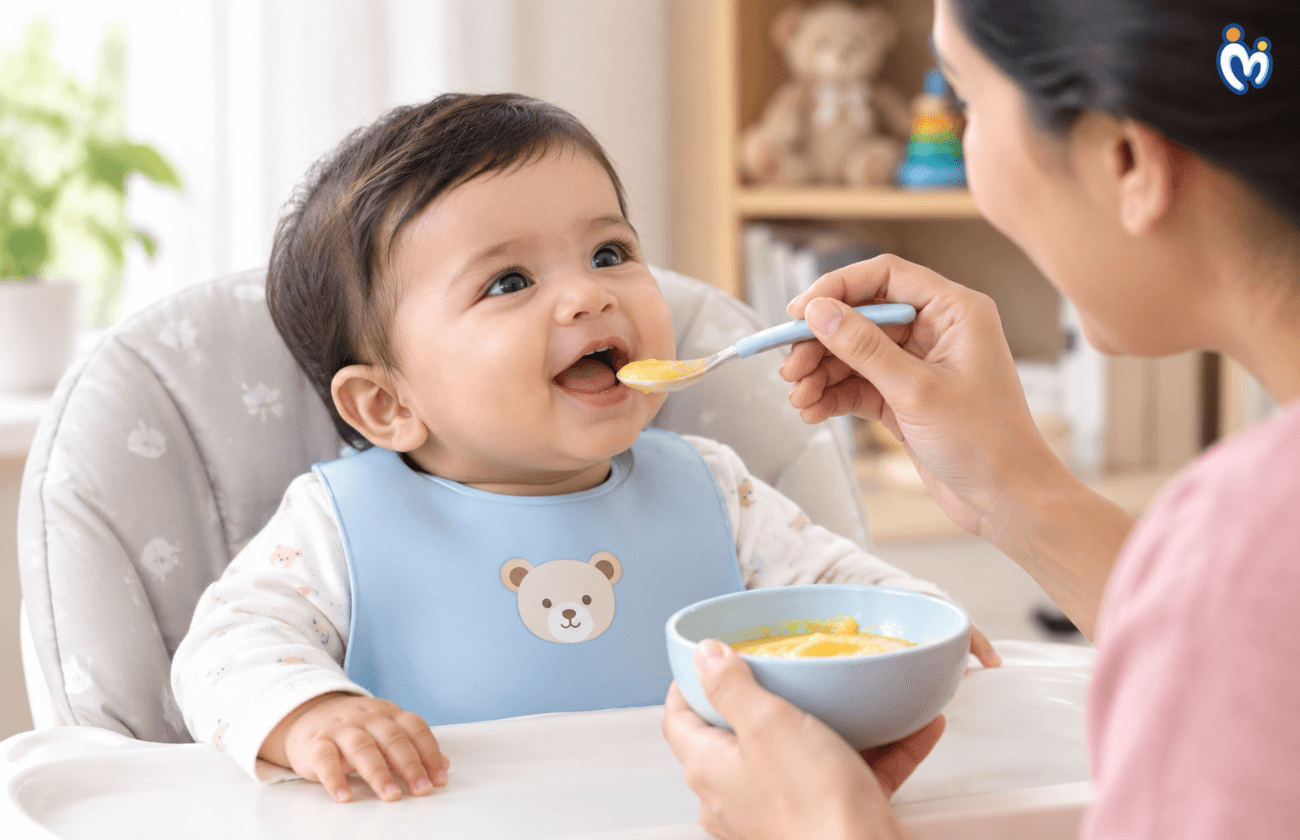
A feeding plan for a 6-month-old can comprise nutritious supplementary foods during the day and breastfeeding during the night. Begin with small portions of soft, age-appropriate foods like mashed dal, khichdi, vegetables, fruits, and iron-rich options. Gradually introduce new tastes and textures, follow your baby’s hunger cues, and avoid honey, added salt, added sugar, and choking hazards.
What Should a 6-Month-Old Eat?
The feeding plan for 6-month-old infants consists of not only breast milk but also supplementary food that is appropriate for this age group.
As per the World Health Organization (WHO) recommendation, supplementary foods should be given to a baby who is 6 months old while breastfeeding. Some of the Indian supplementary foods are mashed dal, khichdi, vegetables, bananas, or even grains.
Simple first foods for a baby
Food group | Examples |
Grains | Soft rice, oats, ragi porridge |
Pulses | Well-cooked, mashed moong dal or masoor dal |
Vegetables | Mashed carrot, pumpkin, potato |
Fruits | Mashed banana, ripe pear, avocado |
Iron-rich foods | Iron-fortified infant cereal, well-cooked egg mashed appropriately |
How Can You Create a Simple 6-Month Baby Feeding Schedule?
A feeding plan for a 6-month-old works best when based on the infant's natural signals. Begin with meals throughout the day, offering breakfast, fruit, lunch, an evening snack, and dinner in age-appropriate portions and textures.
6-Month Baby feeding schedule
Time | Meal | Food Examples |
8.00 AM | Breakfast | Soft sooji halwa, oats porridge, or ragi porridge |
11.00 AM | Fruit | Mashed banana, ripe pear, or mashed avocado |
2.00 PM | Lunch | Soft vegetable khichdi or well-cooked, mashed dal with vegetables |
5.00 PM | Evening Snack | Soft, steamed idli pieces or other suitable soft-cooked vegetables |
8.00 PM | Dinner | Soft upma, khichdi, or another well-cooked, age-appropriate meal |
11.00 PM | Breastfeeding | Breast milk, according to your baby's needs |
2.00 AM | Breastfeeding | Breast milk, according to your baby's needs |
5.00 AM | Breastfeeding | Breast milk, according to your baby's needs |
Also, this isn’t a strict feeding plan; it is a flexible example. Remember that breast milk remains an important source of nutrition during this stage, so rather than replacing it, you should include supplementary foods that complement milk feeds.
How Should You Introduce New Foods?
The slow introduction of solid food will make it easier for the mother and the baby to feed. The baby should be fed small amounts of food at once, and new foods should be introduced slowly.
Follow these steps
- Start with a small spoonful of soft food.
- Offer diverse foods individually at first to help determine possible reactions.
- Include iron-rich foods regularly.
- Gradually progress from smooth mashes to thicker textures and soft lumps.
- Follow hunger and fullness cues instead of forcing your baby to finish.
Please do not push your child to eat their food. Mealtime should be seen as a chance to introduce your child to different flavors. Remember to seek medical advice first if your baby has severe eczema or a known food allergy.
What Foods Should You Avoid?
Certain foods may need additional consideration when being introduced as starting solids at 6 months. Adding honey is also prohibited for babies less than 12 months of age, according to the advice of the American Academy of Pediatrics (AAP). You must always avoid the intake of salt and sugar in the baby's diet.
Avoid choking hazards like whole nuts, whole grapes, hard raw vegetables, and a spoonful of thick nut butter.
Moreover, cow’s milk shouldn’t replace breast milk as the main drink before 12 months, although pasteurised yoghurt can be given as a food.
How Can You Keep Baby Care Simple During Mealtimes?
When your baby gets familiar with new foods, spills, food around the mouth, and a little extra mess is going to be all part of this experience. Hence, keeping your baby clean and comfortable can make these mealtimes more fun and easygoing for both you and your little one. MamyPoko Extra Clean Wipes can be made to use for quick clean-ups, while MamyPoko Skin Breathe Care diapers can continue keeping your baby’s skin comfortable during everyday diapering.
With patience, age-appropriate foods, and a relaxed practice, introducing solids can become a positive and enjoyable part of your baby's growing routine.
FAQ's





Popular Blogs
Other Related Blogs
Little Tummies, Big Appetites: How to Introduce New Flavours to Your Growing Infant
When Nisha’s little boy, Aarav, turned six months old, she was excited and nervous in equal measure. The breas...

How To Switch from bottle feed to Glasses
Congratulations! If you’ve just confirmed your pregnancy, you’re probably thinking about how to tell friends a...

The Ultimate Checklist for your Baby's First Day Outdoors
Congratulations! If you’ve just confirmed your pregnancy, you’re probably thinking about how to tell friends a...
Hey mamies, stay connected!
Sign up and get an opportunity to receive complimentary samples with our informative email newsletter.